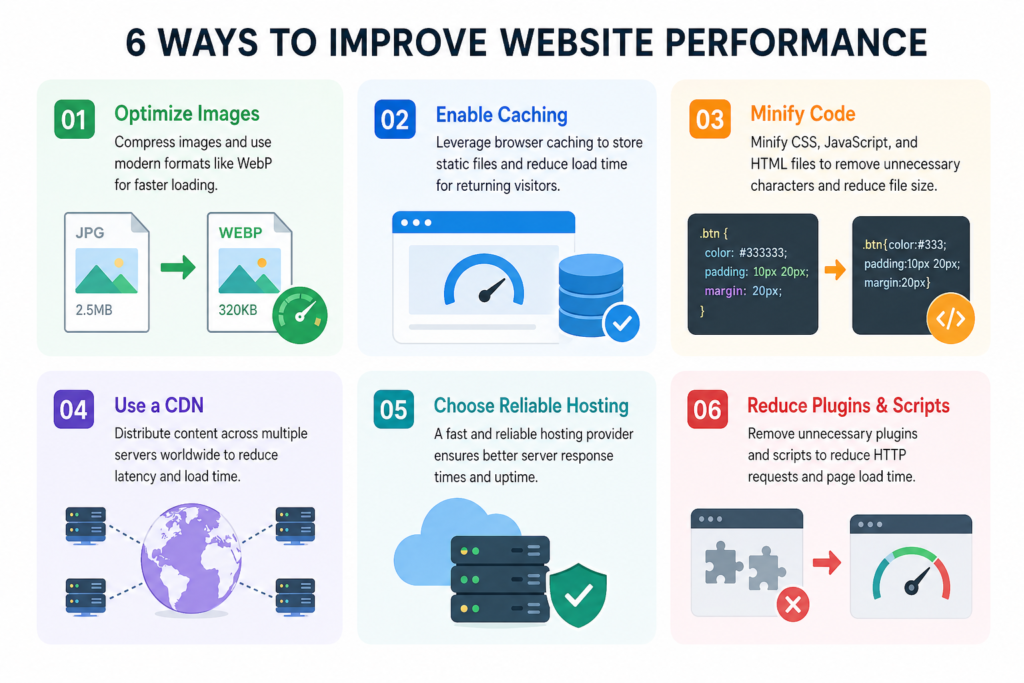
In today’s fast-paced digital landscape, website performance is no longer optional—it’s critical. Whether you’re running an e-commerce store, a portfolio, or a corporate site, your website speed directly impacts user experience, search engine rankings, and conversion rates.
If your site is slow, visitors won’t wait—they’ll leave.
⚡ What Is Website Performance?
Website performance refers to how quickly your web pages load and become interactive for users. It includes factors like:
- Page load speed
- Time to first byte (TTFB)
- Interactivity and responsiveness
- Visual stability during loading
Search engines prioritize fast-loading websites, making performance a key part of modern technical SEO.
⏱️ The 3-Second Rule: Why Speed Matters
Studies consistently show that users expect a website to load within 3 seconds or less. If it takes longer:
- Bounce rates increase dramatically
- User satisfaction drops
- Conversion rates decline
Even a 1-second delay can reduce conversions by up to 7%. That’s a huge impact for any online busines
🧠 Key Factors That Affect Website Speed
Understanding what slows down your website is the first step toward optimizing it.
1. Unoptimized Images
Large image files are one of the biggest performance killers. High-resolution images without compression can significantly slow load times.
2. Excessive JavaScript and CSS
Too many scripts and stylesheets increase page weight and delay rendering.
3. Poor Hosting Services
Cheap or shared hosting often leads to slow server response times, especially during traffic spikes.
4. No Caching Strategy
Without caching, your website reloads everything from scratch for every visitor.
5. Too Many Plugins
Especially common in CMS platforms—excess plugins can bloat your site and create conflicts.
🎯 Final Thoughts
A visually stunning website may grab attention—but a fast, seamless experience is what keeps users engaged and converts them into customers.
In 2026 and beyond, performance is not just a technical concern—it’s a business strategy.